Results in UTe2 are inseparable from who grew the crystal and which magnet they used. This page is a map of methods and groups as they appear in the primary literature—not an endorsement ranking.
Crystal growth centers
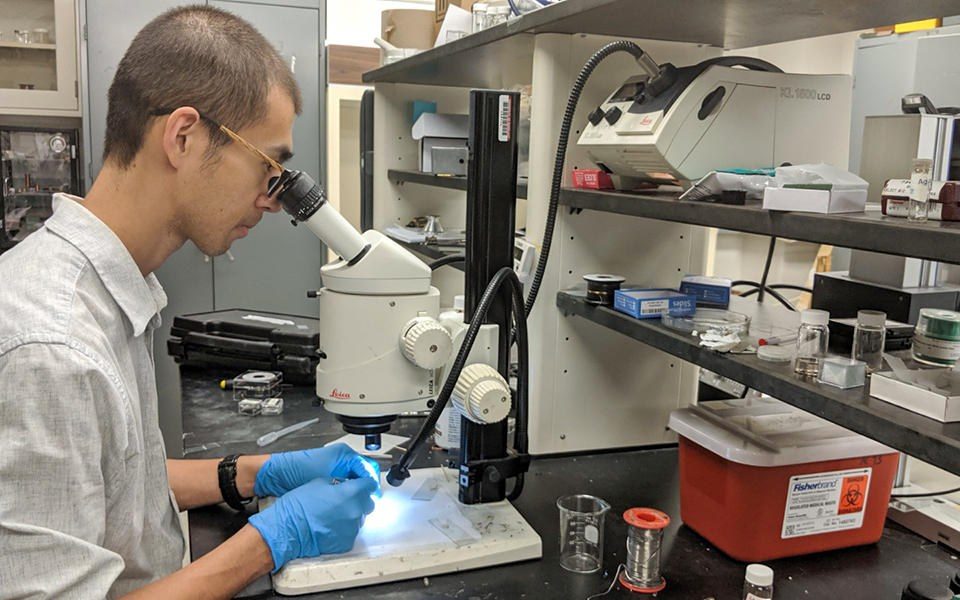
NIST / University of Maryland QMC (Butch, Paglione, Ran and collaborators) produced the CVT discovery crystals and much of the early US characterization[1]. Tohoku / CEA Grenoble / JAEA (Aoki, Knebel, Flouquet, Sakai, Haga, Tokunaga, Ishida and collaborators) independently confirmed superconductivity and continue to dominate high-pressure, NMR, and dHvA work[2][3][7]. Los Alamos (Rosa, Thomas, Bauer, Thompson and collaborators) refined CVT growth toward Tc~2 K and led clean-crystal Kerr tests[4]. Molten-salt flux growth from JAEA/Sakai unlocked RRR~103 crystals[3].
High-field facilities
Pulsed and DC fields above 30 T are not tabletop. Extreme Hc2, reentrance, and the superconducting halo required national magnet labs (e.g. MagLab collaborations visible in Ran Nature Physics and Lewin Science authorships)[1][5]. When a claim needs >40 T, reproducibility is limited by beamtime and crystal orientation accuracy as much as by theory.
Local probes
STM groups (Madhavan and collaborators; Davis group PDW work) access surface pairing textures CVT crystals present[6][8]. Microwave/penetration-depth work (Anlage, Shibauchi and collaborators) constrains low-energy excitations[7]. Kerr interferometry (Kapitulnik; Thomas/LANL) is the TRSB battleground[4].
Method bias checklist
- Surface vs bulk: STM/Kerr probe ~nm to hundreds of nm; specific heat/μSR average the crystal[4][6].
- Defects: vortex pinning and magnetic clusters track low Tc / high γ*[4].
- Powder vs single crystal NMR: early Knight-shift constancy was on powder[1]; axis-resolved MSF NMR is stricter.
- Pressure medium and field angle: misalignment of a few degrees near the b axis can fake or hide reentrance[5][7].
How to read a new UTe2 paper
- Growth method and Tc / RRR / residual γ.
- Single vs double specific-heat transition.
- Whether the claim was reproduced on MSF-grade crystals.
- Whether a surface probe is being generalized to bulk order.
- Whether “topological” is in the data or only in the outlook paragraph.
Theory groups in the citation graph
Agterberg, Yanase, Ishizuka, Machida, Mineev and others appear repeatedly in theory/experiment collaborations on irreps, nonunitary states, and ferromagnetic-fluctuation glue. Reviews by Aoki et al. (J. Phys.: Condens. Matter 2022) remain the best single entry point for the pre-2023 consensus and its caveats. Theory papers are cited on this site when they constrain interpretation of an opened experiment—not as free-floating authority.
Typical collaboration pattern
A modern UTe2 paper often splits growth (JAEA / LANL / UMD), low-field characterization (home dilution fridges), and pulsed-field work (national labs). STM and Kerr usually happen at dedicated optical/STM labs on shipped crystals. That pipeline introduces selection bias: only certain surfaces survive shipping and polishing for Kerr, and STM requires specific cleaves. Negative Kerr results on polished MSF surfaces are therefore not automatically in contradiction with STM on as-cleaved CVT surfaces—but neither can be ignored.
Public imagery
NIST released public-domain photographs of early UTe2 crystals and laboratory setups. Those images illustrate scale (millimeter crystals) but are not scientific data. Figure licenses elsewhere on this site are restricted to CC BY / public domain; Nature/Science paywalled figures are not mirrored.
Expanded reading checklist with examples
Example A — Kerr TRSB claim: Check whether the crystal’s specific heat shows one or two transitions, residual γ*, and whether zero-field spontaneous Kerr was demonstrated with heat-pulse cycling (Ajeesh protocol) or only field-trained signals. Field-trained Kerr alone is not TRSB of the order parameter.
Example B — full-gap claim: Prefer thermal conductivity or specific heat on MSF crystals with documented RRR. Microwave residual fluid on early CVT crystals is a weaker full-gap/node discriminant.
Example C — high-field halo: Confirm field angle relative to b, whether resistance or thermodynamics defines the boundary, and maximum pulsed field. Extrapolations and resistive midpoints differ.
Example D — topological outlook: Separate the Results section from the final paragraph. If Results lack surface-arc spectroscopy or defect braiding, the outlook is aspiration.
Suggested “sample passport” for papers
Authors and readers both benefit when a UTe2 paper states, in one table: growth method (CVT/MSF), Tc (resistive and thermodynamic), transition width, residual γ*, RRR, whether specific heat is single- or double-peaked, crystal axes used, and surface preparation for optical/STM work. Several recent papers already do this (e.g. Ajeesh et al.’s Table I). Older papers that omit these data are harder to place on the quality axis and should be cited with that caveat.
Magnet infrastructure
Resistive and hybrid magnets at national labs enable DC fields into the 30–45 T class; pulsed magnets reach the 70–100 T class used for halo mapping. Dilution-refrigerator inserts, field-rotation stages, and eddy-current heating in pulsed fields all limit which thermodynamic probes can accompany transport. That is why many high-field boundaries are resistive midpoints first and specific-heat confirmations later (if ever). When a feed entry cites only resistivity at 60 T, mark it as transport-defined until thermodynamics arrives.
Method → typical bias
| Method | Sees | Typical bias |
|---|---|---|
| Specific heat | Bulk thermodynamic transitions | Inhomogeneous double peaks look like multicomponent order |
| Polar Kerr (1550 nm) | ~300 nm surface optical TRSB | Pinned moments / vortices; polishing impurities |
| μSR | Bulk local fields | Dynamic clusters in dirty CVT |
| STM | Atomic surface DOS | Termination-specific; not bulk OP |
| Pulsed-field resistivity | High-H boundaries | Heating, angle error, non-thermodynamic |
| NMR Knight shift | Spin susceptibility | Powder averages; vortex cores; demagnetization |
Growth lessons from the community review
Aoki et al. (J. Phys.: Condens. Matter 2022) document the evolution of CVT practice: early stoichiometric U:Te charges with iodine produced crystals with sharp specific-heat jumps but large residual γ (near 50% of the normal-state value in some early reports)—briefly fueling “extreme nonunitary half-gapping” talk. Off-stoichiometric U:Te ≈ 1:1.5–1.85 and lower hot-zone temperatures improved quality; by the review’s writing, best crystals approached Tc~2 K with residual γ down toward ~10% of γN. Sakai et al.’s molten-salt flux method (Phys. Rev. Mater. 6, 073401, 2022) then pushed RRR into the hundreds–thousands and enabled dHvA (Aoki et al., JPSJ 91, 083704, 2022).
Te self-flux growth is noted as yielding poor RRR (~3) without bulk superconductivity—useful negative control for synthesis claims.
Who closed the Fermi-surface gap
Before MSF-quality crystals, the absence of quantum oscillations was a standing puzzle in the 2022 review. Aoki’s Oarai/Tokai MSF crystals with RRR~220, Tc=2.06 K, and residual γ only ~3% of γN finally yielded α and β dHvA branches: corrugated cylindrical hole and electron sheets matching GGA+U (U=2 eV), with cyclotron masses 32–57 m0. That single experimental step rewrote what theorists could claim about topology (nodes require the Fermi surface to hit certain axes).
What to realistically expect
Expect: Continued specialization—JAEA/Tohoku for MSF and NMR, MagLab/LANL/UMD for pulsed fields and Kerr, STM groups on shipped cleaves. Cross-lab sample passports (Tc, RRR, γ*, single/double peak) will matter more than lab brand names.
Do not expect: One group’s surface probe to overrule another’s bulk thermodynamics without shared crystals. Method bias is structural, not a conspiracy.
References
- Ran, S., Eckberg, C., Ding, Q.-P., Furukawa, Y., Metz, T., Saha, S. R., Liu, I.-L., Zic, M., Kim, H., Paglione, J., & Butch, N. P. “Nearly ferromagnetic spin-triplet superconductivity.” Science 365, 684–687 (2019). DOI 10.1126/science.aav8645.
- Aoki, D., Nakamura, A., Honda, F., Li, D., Homma, Y., Shimizu, Y., Sato, Y. J., Knebel, G., Brison, J.-P., Pourret, A., et al. “Unconventional Superconductivity in Heavy Fermion UTe2.” Journal of the Physical Society of Japan 88, 043702 (2019). DOI 10.7566/JPSJ.88.043702.
- Sakai, H., Opletal, P., Tokiwa, Y., Yamamoto, E., Tokunaga, Y., Kambe, S., & Haga, Y. “Single crystal growth of superconducting UTe2 by molten salt flux method.” Physical Review Materials 6, 073401 (2022). DOI 10.1103/PhysRevMaterials.6.073401.
- Ajeesh, M. O., Bordelon, M., Girod, C., Mishra, S., Ronning, F., Bauer, E. D., Maiorov, B., Thompson, J. D., Rosa, P. F. S., & Thomas, S. M. “Fate of Time-Reversal Symmetry Breaking in UTe2.” Physical Review X 13, 041019 (2023). DOI 10.1103/PhysRevX.13.041019.
- Lewin, S. K., Czajka, P., Frank, C. E., et al. “High-field superconducting halo in UTe2.” Science 389, 512–515 (2025). DOI 10.1126/science.adn7673.
- Jiao, L., Howard, S., Ran, S., Wang, Z., Rodriguez, J. O., Sigrist, M., Wang, Z., Butch, N. P., & Madhavan, V. “Chiral superconductivity in heavy-fermion metal UTe2.” Nature 579, 523–527 (2020). DOI 10.1038/s41586-020-2122-2.
- Aoki, D., Brison, J.-P., Flouquet, J., Ishida, K., Knebel, G., Tokunaga, Y., & Yanase, Y. “Unconventional superconductivity in UTe2.” Journal of Physics: Condensed Matter 34, 243002 (2022). DOI 10.1088/1361-648X/ac5863.
- Gu, Q., Carroll, J., Wang, S., Ran, S., et al. “Detection of a pair density wave state in UTe2.” Nature 618, 921–927 (2023). DOI 10.1038/s41586-023-05919-7.